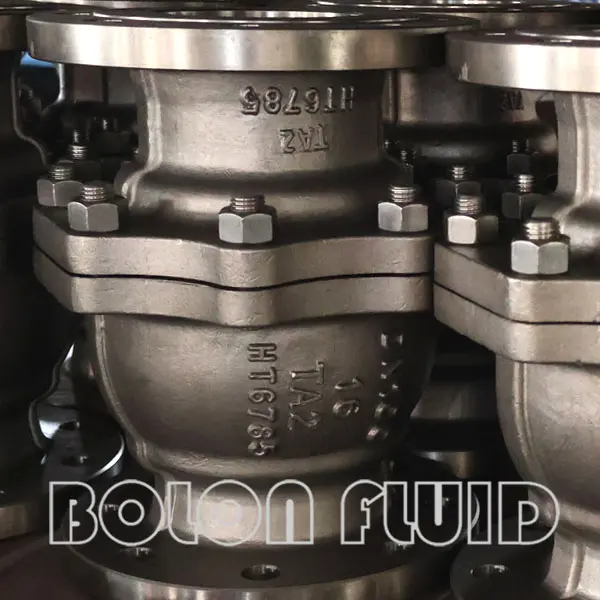
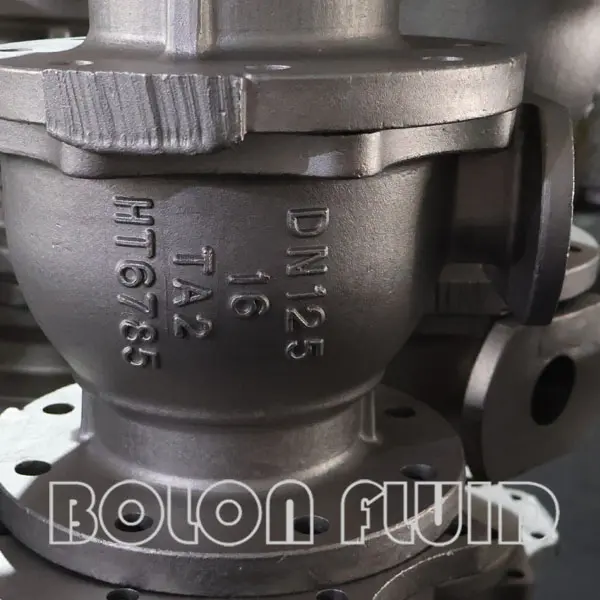
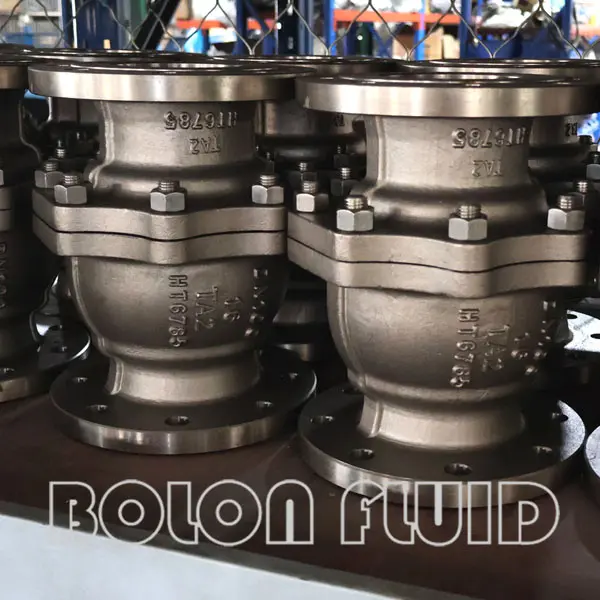
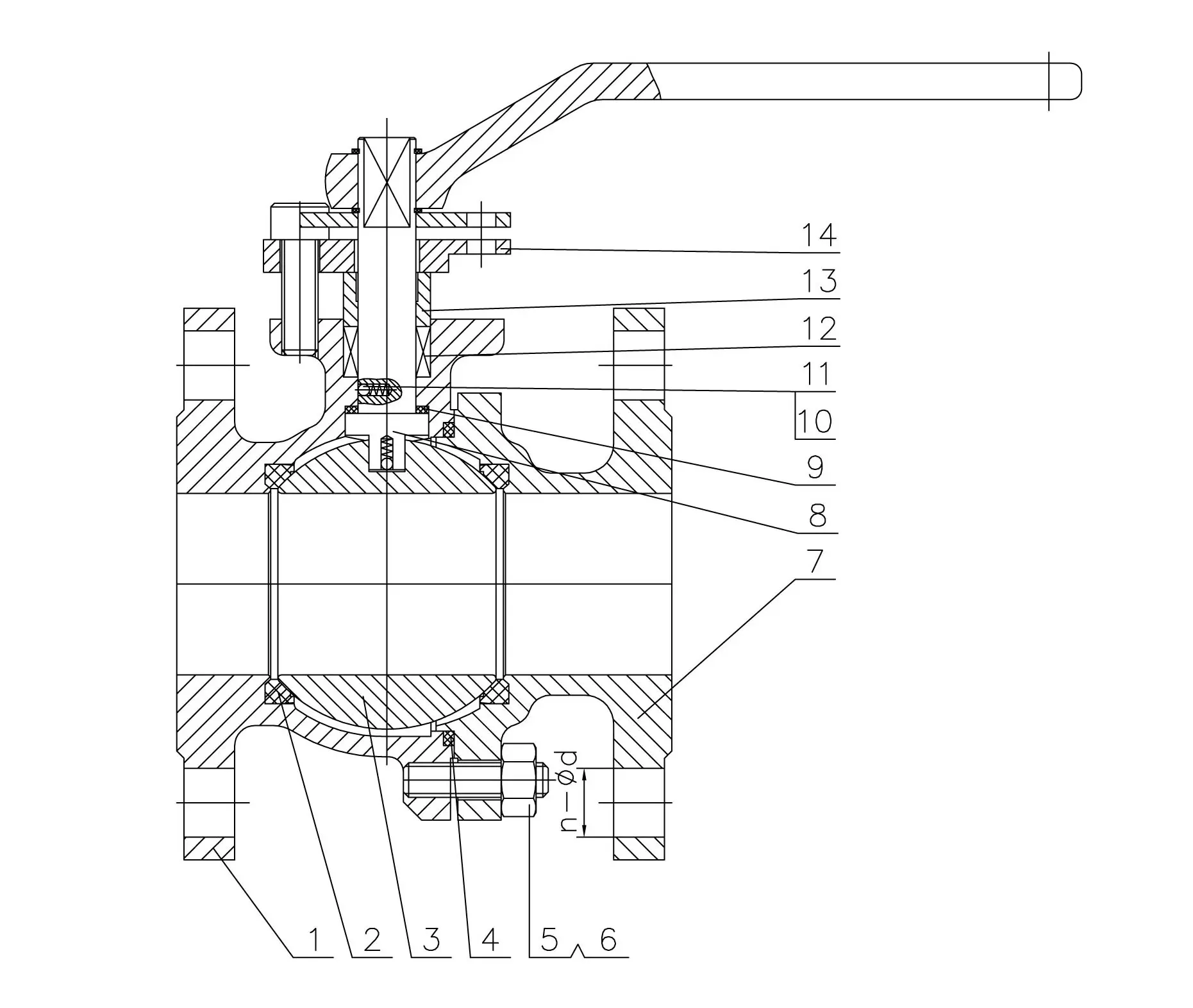
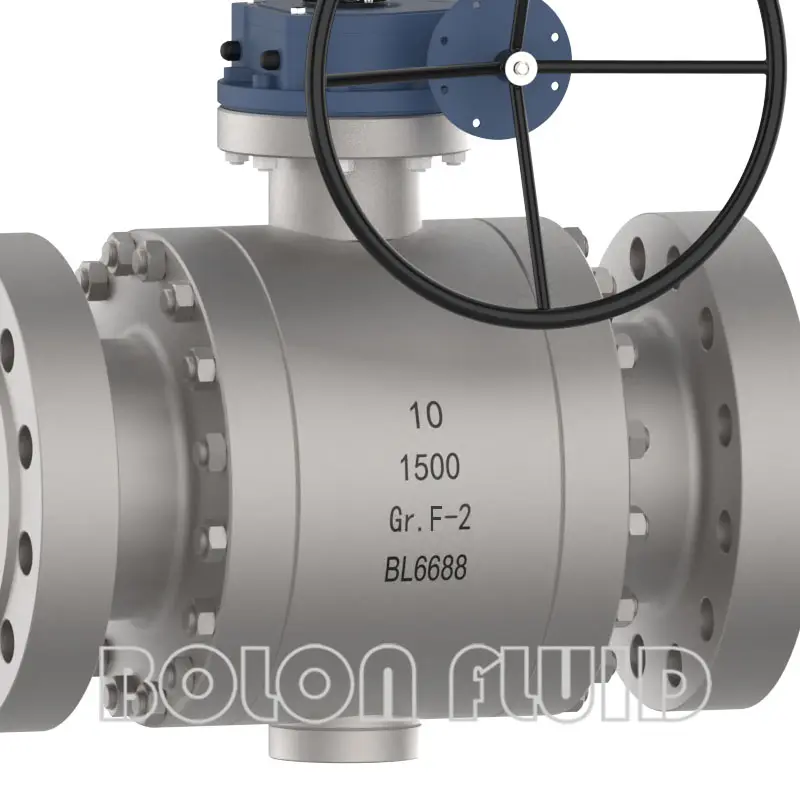
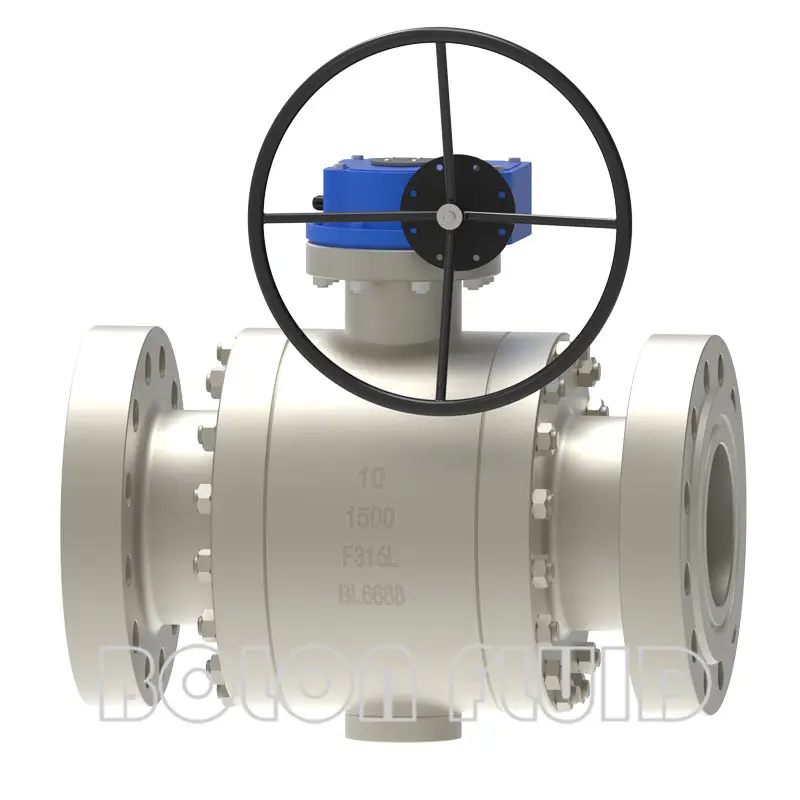
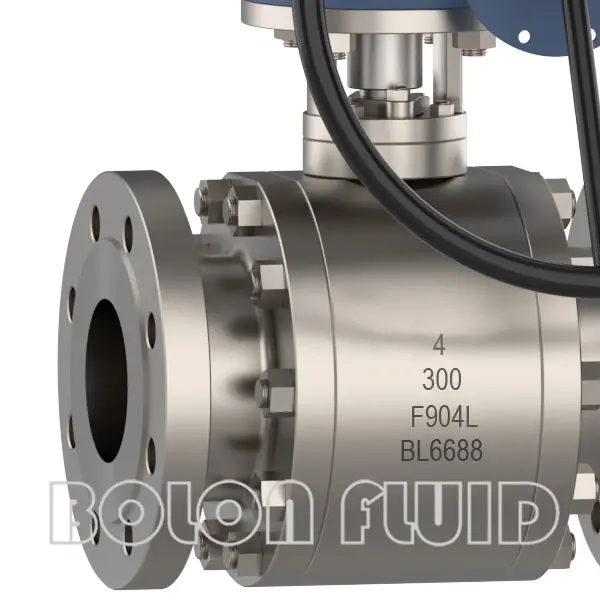
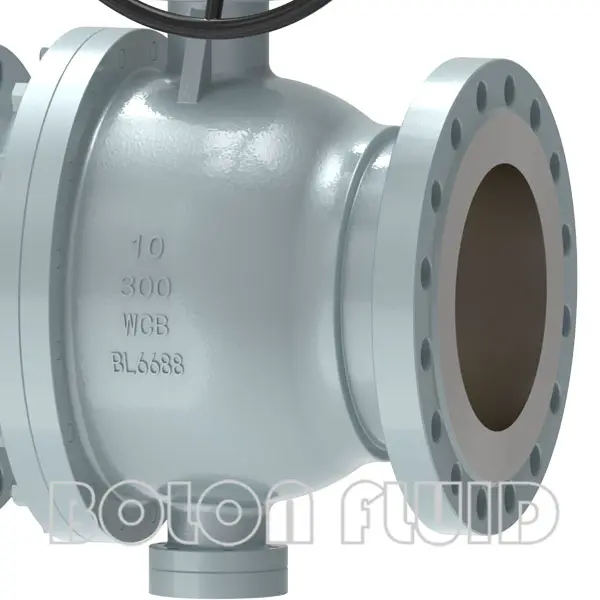
Titanium ball valve is a ball valve made of pure titanium or titanium alloy. Titanium has strong corrosion resistance due to its highly chemically active metal valves. Titanium reacts with oxygen to form a strong passive oxide film on its surface. The oxide film on the titanium ball valve is very stable and difficult to dissolve. Even if it is damaged, as long as there is sufficient oxygen, it can repair itself and quickly regenerate.
– Size from 2” to 8” ( DN50mm to DN200mm).
– Pressure ratings from Class 150LB to 600LB ( PN10 to PN100).
– RF, RTJ or BW end.
– PTFE, Nylon, etc.
– The driving mode can be manual, electric, pneumatic, or equipped with an ISO platform.
– Cast titanium material GB/T6614 ZTA1, GB/T6614 ZTA2, GB/T6614 ZTC4, etc.
Design Standard: API 6D
Flange Diameter Standard: ASME B16.5, ASME B16.47, ASME B16.25
Face-to-face Standard: API 6D, ASME B16.10
Pressure Test Standard: API 598
Chemical properties: Titanium has high chemical activity and can react with many elements. At high temperatures, it can react with carbon monoxide, carbon dioxide, water vapor, ammonia, and many volatile organic compounds. Titanium reacts with certain gases, not only forming compounds on the surface, but also entering the metal lattice to form interstitial solid solutions. Except for hydrogen, all reaction processes are irreversible.
Antioxidant properties: When titanium is heated in an air medium at normal working temperature, it forms an extremely thin, dense, and stable oxide film. It has a protective effect and can prevent oxygen from diffusing into the metal without further oxidation; Therefore, titanium is stable in air below 500 ° C. Below 538 ℃, the oxidation of titanium follows a parabolic pattern. When the temperature is above 800 ℃, the oxide film decomposes and oxygen atoms enter the metal lattice with the oxide film as the conversion layer, increasing the oxygen content of titanium and thickening the oxide film. At this time, the oxide film has no protective effect and will become brittle.
Forging: The heating temperature for ingot opening is 1000-1050 ℃, and the deformation per heat is controlled at 40-50%. The heating temperature for blank forging is 900-950 ℃, and the deformation is controlled within 30-40%. The heating temperature for die forging should be between 900 and 950 ℃, and the final forging temperature should not be lower than 650 ℃. In order to achieve the required size of the finished parts, the subsequent repeated heating temperature should not exceed 815 ℃, or approximately lower than β The transition temperature is 95 ℃ m.
Casting: In the casting of industrial pure titanium, steel ingots or deformed bars melted in a vacuum consumable electrode arc furnace can be used as consumable electrodes, and cast in a vacuum consumable electrode arc furnace. The casting mold can be graphite processing type, graphite pressing type, and investment shell type.
Welding performance: Industrial titanium is suitable for various welding. The welded joint has excellent flow characteristics and has the same strength, plasticity, and corrosion resistance as the base material.
TA2 belongs to a single category α Compared to industrial pure titanium, it has the advantages of low density, high melting point, strong corrosion resistance, good mechanical properties and biocompatibility, and is widely used in aerospace, shipbuilding, and biomedical fields